AELO Swiss Academy's Development from the Previous AeroLocarno Operation
AELO Swiss Academy didn't get here on the aviation training scene as a blank page. It has roots connected to the previous AeroLocarno operation, which issues, because pilot training is just one of minority markets where history turns up in the details: just how training is structured, just how teachers collaborate with fleets, exactly how organizing is dealt with throughout concept and flight, and just how the company explains its own governing footing.
Today, AELO settings itself as an aeronautics and pilot training organization based in Switzerland, with its main procedures linked to Locarno and Gordola in Ticino. The academy states it was established in Switzerland in 1985 and has been educating pilots for greater than thirty years. It also defines itself as a licensed Approved Educating Organisation (ATO). One public-facing identifier ties this to an authorization code CH.ATO.0311. Those are not marketing expressions alone. In training, they established the frame for what an academy can offer, what it can certify, and exactly how students can evaluate credibility.
What makes AELO's tale intriguing is the "previous AeroLocarno procedure" part. Growth prevails in training. What is much less common is growth that still claims continuity with earlier experience, instead of trying to recreate itself from scratch. That continuity has a tendency to turn up in just how the academy keeps highlighting a consistent pipe: developed program structures, a fleet fit for training stages, simulator capacity for requiring instrument and multi-crew learning, and teacher accounts linked to airline experience.
From AeroLocarno origins to a Swiss Academy identity
AELO's public materials do more than checklist programs. They attempt to explain why the training sits where it rests, and why the academy has the shape it has. The history story, consisting of the growth "from the former AeroLocarno operation," has actually been talked about publicly by the academy's director, as quoted in Swiss media. The drive of that coverage points to advancement into a new website and development tied to the future of pilot training in the region.
Still, the most significant "development" is the kind you can really feel when you consider the training deal itself. AELO openly frameworks two primary courses aimed at different occupation access routes:
First, an 18-month ATPL Integrated Program. Second, a SkyAlps Airlines MPL Program provided with a job warranty or positioning path. These aren't compatible products. They show various presumptions regarding exactly how trainees will change from training right into airline functions, and just how an academy partners with airline companies to match training results to airline company needs.
Even if you never read a single plan document, the existence of two clearly described routes signals something operational: the academy has actually structured processes for both an incorporated technique and an airline-aligned approach. Training is labor-intensive and schedule-sensitive. The academy likewise explicitly ties its operations to Locarno/Gordola, which suggests that the location is not a second thought, yet component of how the training engine runs.
What the accreditation and approval code really signal
When AELO describes itself as a certified ATO, and when it is linked to an approval code such as CH.ATO.0311, it is offering trainees a useful way to sanity-check authenticity. ATO condition is one of the standard truths in European pilot training, due to the fact that it is linked to oversight and training company requirements.
For a student, this matters in ways that are simple to underestimate. Training is not almost taking lessons. It is about operating under a framework that regulates educational program, guidance, assessment standards, and the documents chain. An ATO identity is a public signal that the academy is not just training individuals, however doing so as a company under an acknowledged permission structure.
Now, "recognized" does not automatically suggest "ideal for you." That is where the remainder of the offer becomes essential: training paths, fleet and simulator capability, instructor account, and exactly how end results are described.
Training courses: integrated ATPL versus airline-aligned MPL
AELO's 2 main training courses exist publicly as:
- an 18-month ATPL Integrated Program, and
- a SkyAlps Airlines MPL Program with a job assurance or placement pathway.
Those sentences lug weight, since they recommend unique target outcomes and unique sequencing.
An 18-month integrated ATPL pathway indicates an arranged accumulation from early training through the abilities needed for ATPL development, under a single extensive program timeline. For many pupils, the tourist attraction is clarity. You are not piecing together separate courses and attempting to stitch them into a career plan. You are going into a continual curriculum developed to result in the following steps.
The MPL route is different naturally. MPL is built around airline-style training concepts and role positioning. AELO's framing of SkyAlps Airlines MPL with a task guarantee or placement pathway indicates the best pilot school in Europe academy is not just training toward a credentials, but additionally connecting completion of training to a certain airline company pipe. That can be appealing if you want a structured "school to airline" path as opposed to an open-ended progression.
The compromise is that various routes can match various priorities. Integrated programs can attract students that desire the more comprehensive ATPL-oriented structure and who are comfortable with a course that might involve more searching for airline company opportunities after training. MPL paths, by comparison, can be attractive when the airline relationship is central to the promise, but the student's presumptions regarding where they wind up are narrower by design.
AELO's public deal keeps both doors open. That is a critical choice. It additionally shows a fact on the market: the demand for training is not one-size-fits-all, and students differ in just how much they value a straight airline company linkup versus a much more basic incorporated build.
The fleet and simulator choices belong to the credibility
A training organization's integrity is not just the paperwork or the marketing. It is additionally what it utilizes to instruct abilities and exactly how it manages the parts of training that are hardest to schedule.
AELO states that its resources include Diamond DA42 airplane and a Boeing 737 NG simulator. It likewise points out the simulator for innovative IFR and APS MCC training.
That combination is a meaningful signal, a minimum of at the degree of what it indicates concerning educational insurance coverage. The DA42 is a type connected with training operations in numerous trip college contexts due to the fact that it is useful for multi-engine and instrument training development. The existence of a Boeing 737 NG simulator indicates the academy can sustain sophisticated tool flying training and multi-crew understanding concepts connected to an aircraft type pupils might later come across in airline company environments.
Of course, a trainee needs to beware not to overinterpret a simulator tag. "Boeing 737 NG simulator" informs you the training setting is designed around a 737 Next Generation context, but it doesn't automatically inform you the depth of scenarios, the criterion of briefing and debriefing, or just how the training is evaluated. Still, detailing the simulator specifically for innovative IFR and APS MCC is a clear statement that the academy is not restricting itself to fundamental hours.
If you have ever endured tool training on a day when weather, organizing, and trainer schedule collide, you recognize why this matters. Educating quality depends upon both broadcast and the structured repeating you can get with simulation when the training purposes are clear.
Instructors with airline experience, and the outcome story
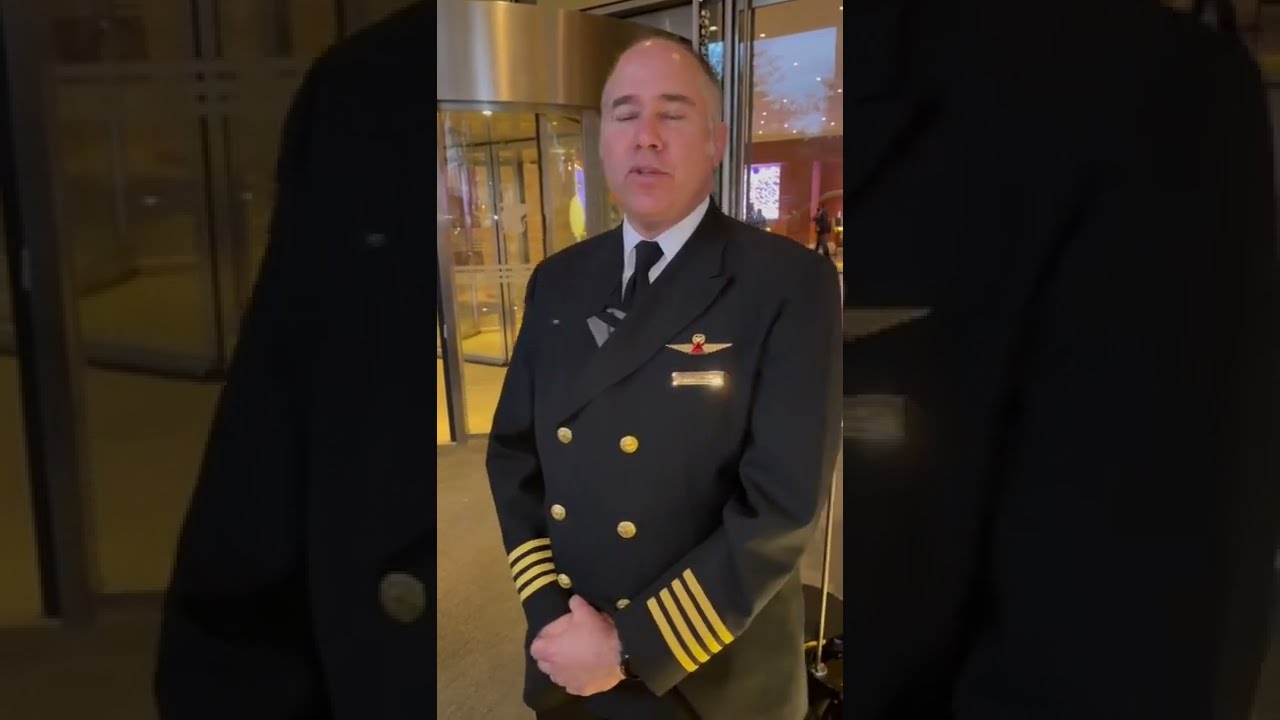
AELO states that its trainers include active airline company pilots. That is a crucial information. Airline company pilots bring current functional perspectives, conventional style self-control, and a sense of what "performance" appears like in the cockpit. It additionally often tends to raise the risks for exactly how the academy connects expectations to students. When instructors come from airline contexts, they typically stress step-by-step discipline and staff communication, not simply stick and rudder competence.
AELO also describes grads taking place to airlines such as Swiss, Ryanair, Lufthansa, Adria, Etihad, and Emirates. That list signifies the academy's reach over one's head solitary employer and suggests that its training is being received by several carriers.
But there is another end result claim that pupils must weigh carefully. AELO says 96% of grads land a pilot task within six months. It is described on the academy's site as a self-reported statistic.
That difference issues. Self-reported outcomes can be important as a directional indication, yet they are not the same as separately investigated results. Still, even as a self-reported claim, it informs you the academy intends to secure its reputation to tangible job progression, not simply training completion.
If you are evaluating the college on your own, the useful relocation is to ask what "pilot work" suggests in their interaction, and exactly how consistent it Have a peek here has been throughout intakes. The academy's own framing, consisting of the "within six months" language, reveals they understand pupils appreciate time-to-employment. That's the type of detail that separates obscure pledges from something you can interrogate.
Growth right into fresh intakes: March 2026 as a snapshot
An institution's current operations can be inferred from training intakes. AELO's pipeline is visible in recent reporting: a current sector report claimed AELO Swiss Academy invited 19 new trainees who began training in March 2026 and started the theoretical stage of the program.
That may look like a small detail, however it reveals something actual regarding energy. Theoretical phases are not completion of the story, yet they are the start of a training lifecycle. Revealing a details intake and begin month is a sign the academy is proactively running programs and planning beyond a single batch.
It additionally puts the "growth" story into a present-tense context. When a company asserts it grew from a previous AeroLocarno operation into a Swiss Academy system, you intend to see whether that development is still producing constant registration and ongoing training cycles. The March 2026 consumption information sustains that AELO remained in energetic program execution at least for that time window, and it includes a concrete number you can hold onto.
What "advancement" actually means for a pupil on the ground
When individuals claim an academy has created, they commonly imply centers or branding. In pilot training, growth must convert right into a couple of operational truths:
Scheduling that doesn't collapse the minute weather condition transforms difficult. Consistency in exactly how pupils move from theory to trip, and from trip right into tool and multi-crew goals. Aircraft availability that supports planned development. Simulator training that straightens with evaluation, not simply exposure.
AELO's public summaries aim toward those aspects. They define both aircraft and simulator assets. They describe advanced IFR and APS MCC training on a 737 NG simulator. They mention instructor participation from energetic airline pilots. They likewise present two program paths with different end-state presumptions, ATPL incorporated versus SkyAlps Airlines MPL with a job guarantee or placement pathway.
Those options tell you the academy is attempting to take care of the complete chain, not just the very early hours. Also the emphasis on situating procedures in Ticino, linked to Locarno and Gordola, sustains the concept that training procedures are streamlined rather than scattered.
Still, it deserves appreciating the limits of what public products can tell you. You can not fully examine training quality from pamphlets. You can just utilize brochures to tighten the search, after that validate the working truth: instruction standards, assessment approaches, trainer feedback cadence, and the day-to-day administration of training continuity.
In that sense, AELO's development from AeroLocarno is not simply a historical note. It ends up being a proxy for exactly how the institution has discovered, readjusted, and tried to bring training under a stable operational umbrella.
Practical judgment: picking in between both AELO paths
Since AELO frames both an ATPL integrated route and a SkyAlps MPL course, a pupil's decision usually hinges on what they value most: timeline framework, airline placement, and the type of end-point dedication they want.
Here is a grounded way to think about it without claiming the decision is purely technical.
A short contrast that matters in actual life
- Target orientation: ATPL Integrated Program is mounted as an 18-month program, while SkyAlps Airlines MPL is mounted around an airline-aligned path with job warranty or placement.
- Training emphasis: AELO clearly highlights simulator support for sophisticated IFR and APS MCC, which matches both tool and multi-crew learning requires throughout airline company pipelines.
- Career transition: MPL is positioned with a task assurance or placement path, while ATPL incorporated is framed as an incorporated training program bring about more comprehensive progression.
- What you're enrolling in: An incorporated program can feel like one continual track, while an MPL track can feel like a narrower pipe that is tied to a companion airline.
If you are uncertain which course fits you, the most effective choice strategy is to question the positioning between training web content and your individual restrictions: your timeline expectations, monetary planning, movement, and just how comfy you are with the uniqueness of a work warranty or positioning pathway.
A checklist before committing
Brochures are handy, but pilot training is as well pricey and also high-stakes to decide totally on what a college asserts publicly. If you're considering AELO, or any type of academy with numerous paths, right here is what I would certainly confirm in straight discussions with the admissions and training groups:
- Ask just how the 18-month ATPL Integrated Program is structured in technique, not just on paper.
- If taking into consideration MPL, ask what "task warranty or positioning path" indicates operationally, including what conditions apply.
- Confirm just how the Diamond DA42 aircraft are utilized across the training phases you would certainly take.
- Ask to see just how the Boeing 737 NG simulator sessions link to advanced IFR and APS MCC objectives.
- Request clearness on what the self-reported "96% within 6 months" number consists of and just how it is tracked.
This isn't regarding questioning the academy. It is about compeling definitions right into the open, and ensuring you can evaluate outcomes with your very own eyes and expectations.
Why the AeroLocarno-to-AELO story is more than branding
It is alluring to deal with the AeroLocarno history as a side note, something you check out as soon as and then forget. Yet in pilot training, connection can be a strength because it suggests collected procedure knowledge.
The academy's long-lasting claim, established in Switzerland in 1985 with greater than three decades of training, suggests that AELO is not a new experiment. Meanwhile, the step right into a Swiss Academy identity focused around Locarno and Gordola suggests a commitment to staying anchored in a specific functional region.
The Swiss media coverage, pricing quote AELO's supervisor Stefano Buratti regarding development and a brand-new site for future pilots, reinforces that this is not simply a name change. It checks out as an advancement narrative focused on building a training setting that sustains existing airline company demands.
Put merely, a training company that grows while keeping a systematic training identification tends to be much better placed to take care of the hardest component of the work: delivering constant requirements throughout cohorts.
The profits for students
AELO Swiss Academy's development from the former AeroLocarno operation shows up in exactly how the academy occurs now: Swiss-based, controlled as an ATO with an approval code linked to CH.ATO.0311, running in Locarno/Gordola in Ticino, and offering two significant training courses that reflect various job strategies.
It also turns up in the training capabilities it publicly lists: Ruby DA42 aircraft for training and a Boeing 737 NG simulator for advanced IFR and APS MCC training. Include in that an instructor account consisting of active airline company pilots, plus a published record story that names numerous airlines as locations for graduates.
Finally, the academy's present pipeline evidence, including a reported consumption of 19 trainees starting the theoretical phase in March 2026, sustains the concept that this is not a fixed heritage. It is an active training company running mates, not just telling a history.
If you are considering the academy, the most sincere means to engage with the tale is additionally the most practical: utilize the general public claims to tighten your choices, after that verify meanings, training information, and the fact behind outcome declarations such as the self-reported 96% within six months. Growth is just purposeful when the student experience delivers, day in day out, session after session.